
Energy Balance Path Energy Balance Path
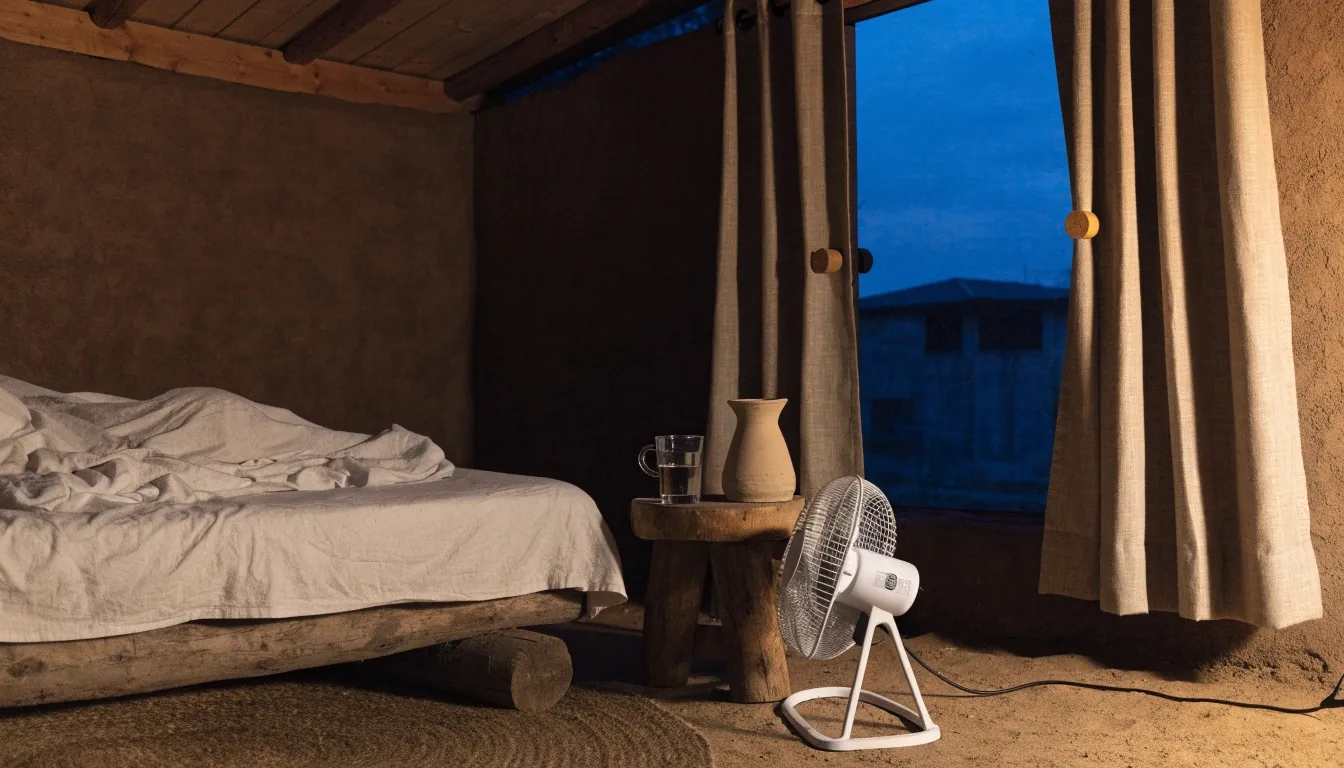
A midday bedroom in Botswana with curtains half drawn and a hard band of sunlight across the wall above a single neatly made bed

Healthy sleep in Botswana

Better Sleep Routines for Warm Botswana Nights

Sleep hygiene advice written for cold climates rarely survives a warm bedroom. Here the routine has to account for heat that lingers into the evening, load-shedding, and early starts.

Six rooms of a sleep routine you can actually keep

Pick two or three. Repeat them.

Time the last meal

Earlier, and lighter

Set a caffeine cutoff

Give it a full week

Hold one order

Same sequence nightly

Plan for outages

Battery fan by the bed

Why a warm room keeps you awake

Your body has to cool down before sleep arrives

Your body needs to drop its core temperature slightly to fall asleep. When the room stays warm, that drop is harder to achieve and you spend longer lying awake. This is why a cool shower before bed helps more than most people expect, and why a heavy late meal works against you.

In Botswana the practical problem is rarely the daytime peak. It is the warm concrete and brick that keeps releasing heat into the bedroom until well after sunset. You are not fighting the afternoon, you are waiting out a building that is still cooling. Over a working week, that delay is what pushes bedtime later and makes the morning harder.

Two versions of the same problem show up often. The first is a bedroom that faces the setting sun, so the wall itself stays warm for hours. The second is a small room with the window shut for security, where air stops moving and humidity builds. Both respond to the same handful of habits: start the cooling earlier than you think, move air rather than blast it at yourself, and lower the temperature of your own body before you get into bed.

Cooling the room without air conditioning

Most of this costs nothing and takes minutes once it becomes a habit. Start the cooling before the evening, not when you are already in bed.

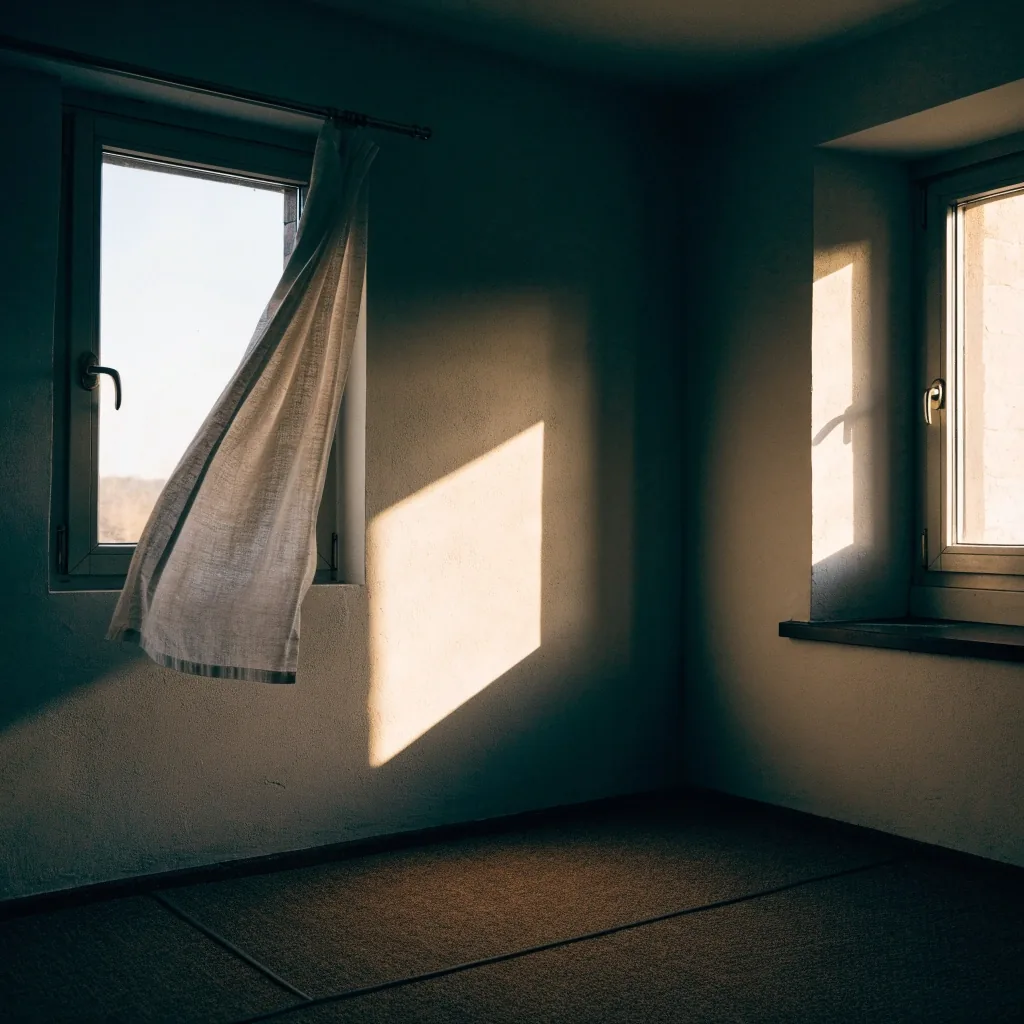
Two open windows on opposite walls of a plain bedroom letting air move through in the late afternoon

Cross-breeze beats a fan aimed straight at you.

  • Wipe neck and wrists Wet a cloth and wipe your neck and wrists before bed. The skin there is thin and close to the surface, so it releases heat quickly and you feel the difference within a minute or two.
  • Open opposite windows Open windows on opposite sides of the room for cross-breeze. One window alone only stirs the air it touches; two windows create a path through the room, which is what actually moves the warm air out.
  • Block the sun all day Close curtains during the day to keep sun out. Shutting the bedroom up in the morning and opening it in the late afternoon is far more effective than leaving it ventilated through the hottest hours.
  • Lighter bedding, fewer layers Sleep with lighter bedding and fewer layers. A heavy duvet traps your own body heat, so the room can be reasonably cool and you will still wake up hot underneath it.
  • Aim the fan at the ceiling A fan aimed at the ceiling moves air through the room better than one aimed directly at you. Direct airflow dries your eyes and nose over a full night; indirect circulation cools the whole volume of the room.

Meal timing and the evening plate

A heavy dinner keeps digestion working when you want it quiet

A large, starchy, or spicy meal within two hours of bed keeps digestion active when you want it quiet. Move your main meal earlier if you can, and keep the evening one lighter. If you are hungry before bed, something small and simple works better than nothing.

Alcohol may make you drowsy, but it fragments sleep later in the night. You may fall asleep faster and still wake at two in the morning, which is the part people rarely connect back to the drink they had with dinner.

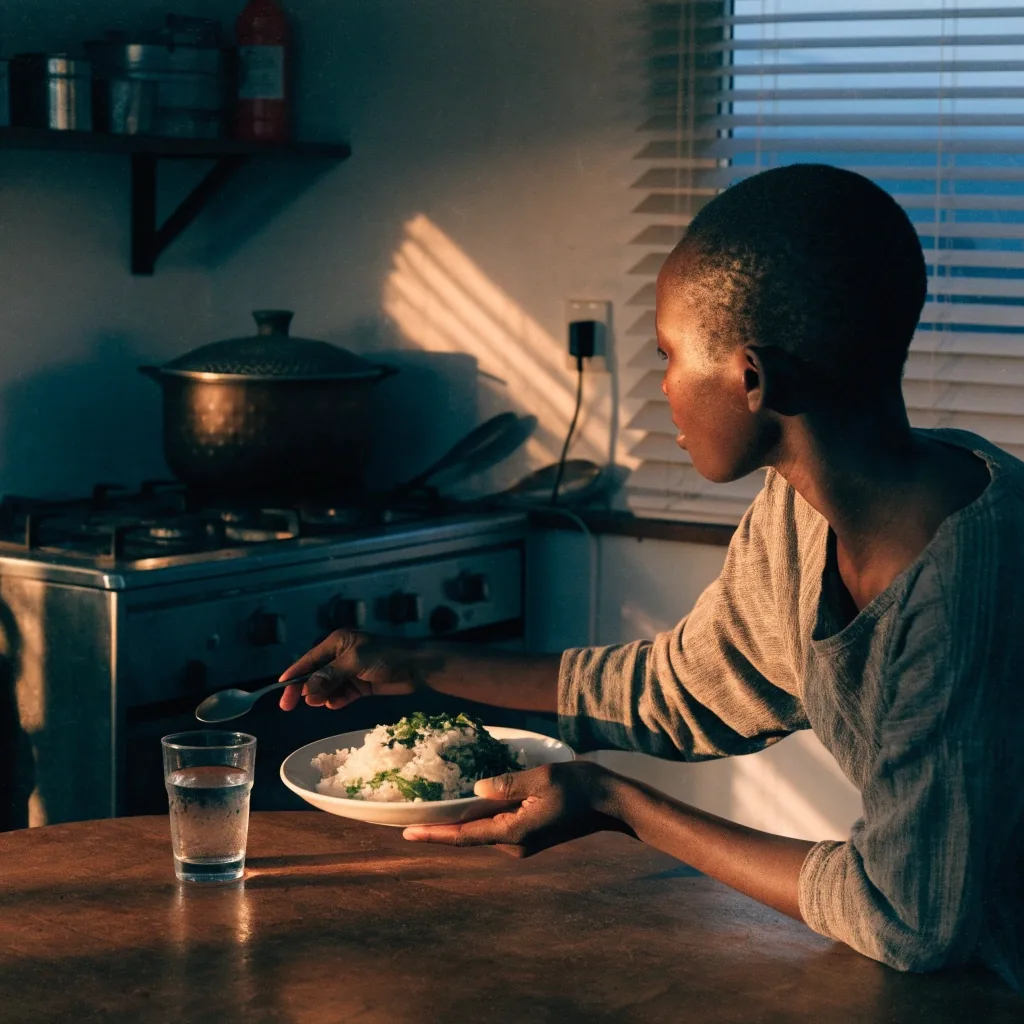
A modest evening plate of rice and vegetables with a glass of water on a bare kitchen table at dusk

Main meal by early evening · lighter plate after

Caffeine, light and the clock your body keeps

Three things shape when you feel sleepy: what is still in your bloodstream, how much light reaches your eyes, and how consistent your waking hour is. Each one is adjustable without buying anything.

Caffeine has a long tail

Caffeine stays in your system for hours. An afternoon coffee or energy drink can still be affecting you at bedtime even if you do not feel wired. Set a cutoff in the early afternoon and stick to it for a week before judging whether it helps. Most people notice a difference once they hold the cutoff long enough for the body to settle into it.

Watch the quiet sources too: strong tea, some soft drinks, and the second cup you take out of habit rather than thirst. If you get headaches when you cut back, step down gradually over several days rather than stopping abruptly.
Bright screens delay the signal

Bright screens late in the evening delay the signal that tells your body it is time for sleep. Dim your phone in the last hour before bed, or better, put it across the room. The point is not the phone itself, it is the light and the late stimulation that comes with it.

Keeping your wake time consistent matters more than your bedtime, because it anchors the whole rhythm. If you must choose one habit to protect, protect the hour you get up. A steady waking time does more for a sleep schedule than an early night you cannot hold.

An evening routine that survives real life

Choose two or three steps you will actually repeat: shower, light meal earlier, phone out of reach. Keep the order the same each night so the sequence itself becomes the cue. A routine you follow five nights out of seven beats a perfect one you abandon.

Write the order down once and stick it near the bed. When the sequence is fixed, you stop spending willpower deciding what to do next, and the steps start to do the work for you.

Keep the order. Change nothing else.

Cool shower
Light plate
Open windows
Phone away
Low light
Same hour
Cool cloth
Move air
Charged light
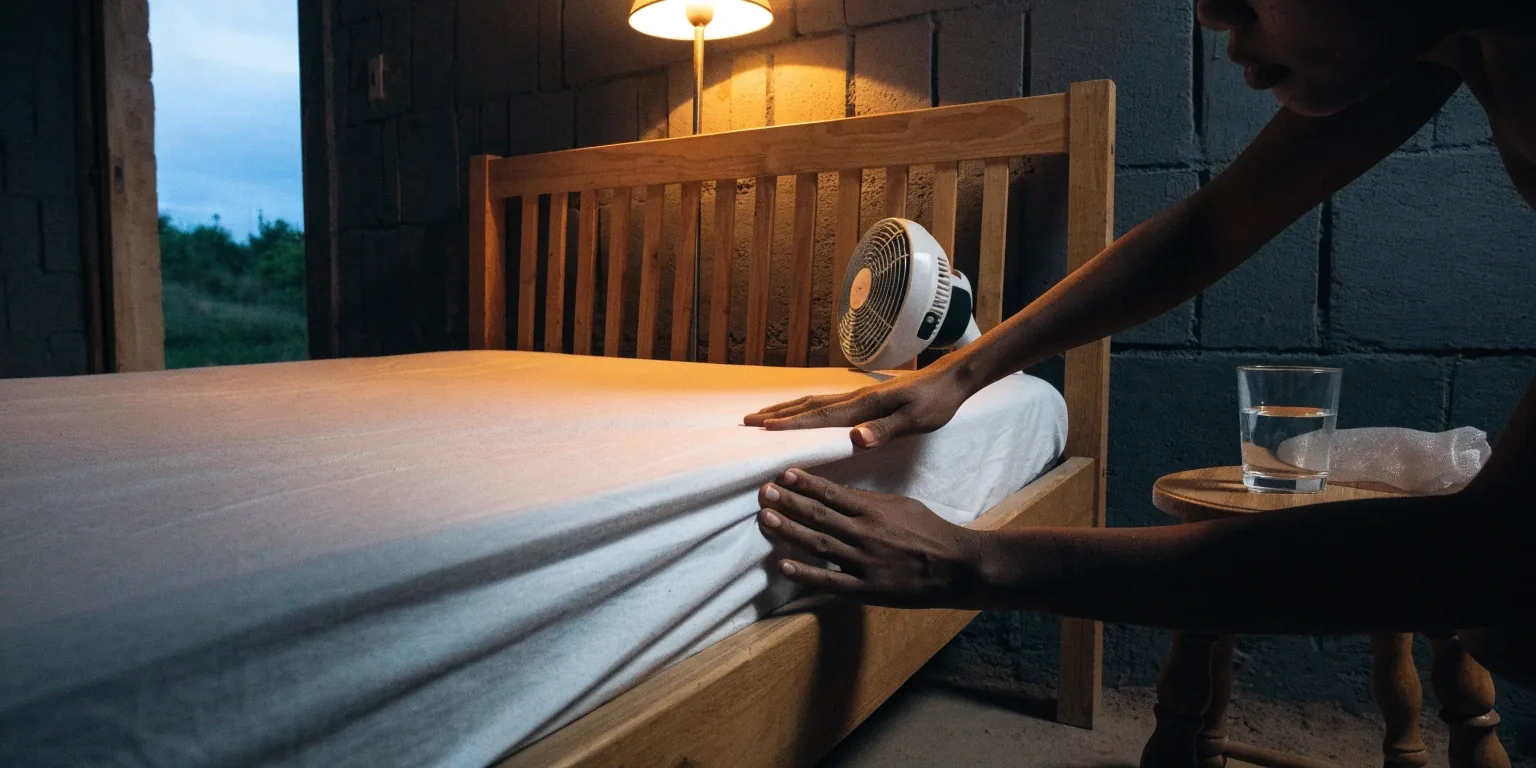
A dim evening bedroom corner with a small rechargeable lamp, a glass of water and folded light bedding beside the bed

When the power is out, and when your hours are not yours

Load-shedding breaks fans, lights and phones, and it breaks routines too. Keep a battery fan or a spray bottle of water by the bed. Use the darkness as a cue rather than a problem and go to bed earlier instead of scrolling in the dark.

Candles are a fire risk in a warm, curtained room. A small rechargeable light is safer, and it means you can still read for twenty minutes without heating the room or straining your eyes.

Shift workers face a genuinely difficult schedule. Keep the room as dark and cool as possible, protect a consistent rest window where you can, and treat a daytime sleep after a night shift with the same respect you would give a night's sleep. A short nap before mid-afternoon can restore energy without hurting your night sleep, but long evening naps and weekend lie-ins push your rhythm later and make Monday harder than it needs to be.

Keep by the bed

  • A battery or rechargeable fan, charged before the evening.
  • A spray bottle of plain water, for a quick cool-down.
  • A small rechargeable lamp instead of a candle.
  • A fixed waking hour you keep even on hard weeks.

Sleeping pills are not part of this routine. Talk to a doctor first.

Questions people ask before they try this

If you snore heavily, wake gasping, or lie awake for weeks despite good habits, see a doctor. Persistent insomnia and sleep apnoea are medical issues, and no routine will fix them. Guidance on this page is educational and does not replace assessment.

Ask a sleep question
How long does a caffeine cutoff take to show a difference?

Hold the cutoff for a week before you judge it. Caffeine clears gradually rather than all at once, so a single changed afternoon tells you very little. Give your body enough consecutive evenings with less of it in the bloodstream, and the difference in how easily you fall asleep is usually clearer by the end of that week.

Is a cold shower right before bed a good idea?

A cool shower helps many people because it lowers the body's surface temperature as you step out. It does not need to be cold, and it does not need to be long. A comfortable cool shower taken shortly before bed is enough for most people in a warm room. If icy water leaves you alert instead of settling you, keep it mild.

Should I keep the window open all night, even in the hottest weeks?

Open it once the outside air is cooler than the room, and close it in the morning before the day heats up. On still nights, one open window does very little because air has nowhere to go. Two open windows on opposite walls give it a path. A fan near the second window helps the air find that path.

Does alcohol help me sleep?

It can make you drowsy at the start of the night, then fragment the sleep that follows. People often fall asleep faster and still wake in the early hours feeling unrested. If you drink in the evening and your nights break apart, that is worth testing for a week or two rather than assuming it is unrelated.

What if none of this works?

If you have held these habits for several weeks and you still lie awake, that is information worth taking to a doctor. Loud snoring, waking with a gasp, or a long stretch of poor sleep deserves a proper assessment. Routines address habits, and some sleep difficulties need more than habit changes.

Two or three habits, held for a fortnight

Start with the cooling steps and one fixed waking hour. Add the caffeine cutoff when those two are steady. If you would like this shaped around your own evenings, we are happy to talk it through.

This page is educational guidance on sleep hygiene and evening routines. It is not a diagnosis and it does not replace an assessment by a doctor or a registered practitioner.

Energy Balance Path · Plot 819, Chobe Commercial Plaza, Kazungula Road, Kasane · +267 625 2190